Raw Honey vs Commercial Honey: What That Supermarket Bottle Actually Contains
The Shah Farms FamilyShare
Two bottles of honey sit side by side. One is glass-clear, perfectly liquid, identical to every other bottle of its brand. The other is slightly cloudy, darker in one season than another, and after some months it starts to crystallise. Most buyers instinctively trust the first bottle. They have it exactly backwards.
What commercial processing does to honey
Pasteurisation
Commercial honey is heated to high temperatures to kill yeast, delay crystallisation and make it easy to pump and bottle at speed. The cost: heat degrades honey's natural enzymes and aroma compounds. Heat damage in honey is so well understood that the international Codex Alimentarius standard uses a heat-marker - HMF - as a quality limit for exactly this reason.
Ultra-filtration
Fine filtering strips out pollen and every microscopic trace of the hive. This makes honey permanently clear - and permanently anonymous. Without pollen, the floral source of honey cannot be verified. It also removes the very substance that lets a laboratory confirm where honey came from.
Blending
Large packers mix honeys from many sources and seasons - sometimes many countries - to hit an identical taste and colour year round. Uniformity is a factory achievement, not a natural one.
And sometimes, adulteration
Where margins are thin, sugar syrup enters the drum. A 2020 investigation by India's Centre for Science and Environment found most major packaged brands failed advanced purity tests - the subcontinent's honey supply chain has a documented problem.
What raw honey is
Raw honey is honey as the bees finished it: strained of wax and debris, and nothing more. Never heated beyond hive temperature, never fine-filtered, never blended. It keeps its pollen, its enzymes, its seasonal character - and yes, its habit of crystallising over time, which is the visible signature of all of the above.
How to tell which one you are holding
- Uniformity: identical taste and colour every time suggests blending; seasonal variation suggests a real harvest.
- Behaviour: never crystallises = probably processed. Granulates over months = behaving like raw honey.
- Traceability: can the seller tell you the floral source and harvest season? A farm can. A packer usually cannot.
Where our honey stands
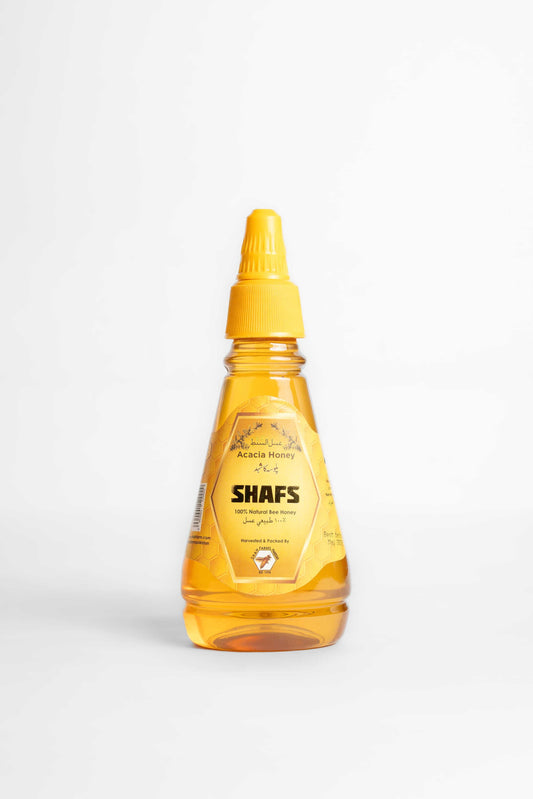
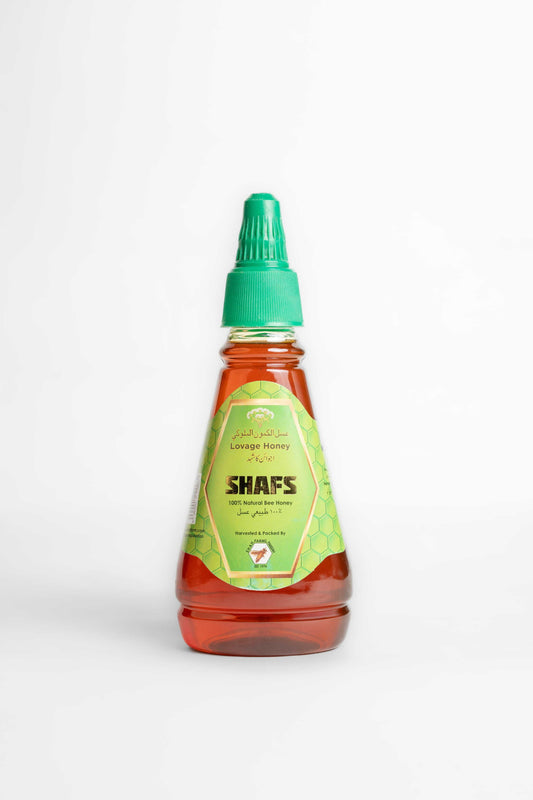
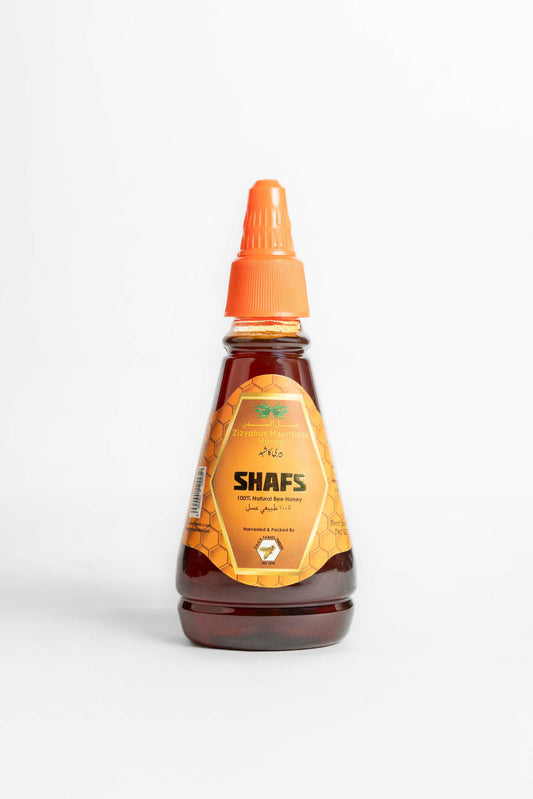
Every Shah Farms jar is raw by the strict definition: unpasteurised, unfiltered, unblended, single-source and traceable to its blossom - acacia, sidr, ajwain or wild flower. We have harvested and packed it ourselves since 1974.