Sidr Honey (Beri ka Shehad): Pakistan's Most Prized - and Most Faked - Honey
The Shah Farms FamilyShare
If Pakistani honey has a crown jewel, it is sidr honey - beri ka shehad. It commands several times the price of ordinary honey, it is the variety most requested by name, and it is - by a distance - the honey most often faked. This guide explains what it actually is, from people who harvest it.
What is the sidr tree?
Sidr is the local name for Zizyphus mauritiana and its relatives - the beri (ber) tree, the same tree whose small brown fruit Pakistanis know well. It is hardy, deep-rooted and thrives in the dry regions of Sindh and Balochistan. For honey, everything depends on its blossom: small, easy to miss, and open for only a short window each year.
Why genuine sidr honey is scarce
Three reasons, and they explain the price:
- A short bloom. The beri flowering season lasts weeks, not months. Whatever the bees gather in that window is the entire year's harvest.
- A mono-floral standard. For honey to be called sidr, the hives must be placed where beri blossom dominates - which means moving hives to the right place at exactly the right time.
- Low yield. Compared with an open wildflower season, a sidr flow is limited. Scarcity is built into the honey itself.
The most celebrated sidr honey in the world comes from Yemen, where it has been treasured for centuries. Pakistan's beri belt produces honey in the same tradition - dark, dense and complex - at a fraction of the imported price.
What real sidr honey is like
- Colour: deep amber to dark brown.
- Texture: thick and slow-pouring, noticeably heavier than lighter honeys.
- Taste: rich, layered, gently caramel-like, with a long finish that lighter honeys simply do not have.
- Behaviour: like all raw honey it can crystallise over time - see our guide on why crystallisation is a good sign.
Why it is the most faked honey in the market
Simple economics: when a honey sells at a premium, blending it becomes profitable. Common tricks include cutting genuine sidr with cheap multi-floral honey, colouring lighter honey darker, or selling ordinary honey under the sidr name outright. The buyer usually has no way to tell - which is why the source matters more than any home test.
How to buy genuine beri ka shehad
- Buy from a producer who harvests it themselves, not a trader who bought drums of it.
- Ask when and where it was harvested. A real producer knows; a blender does not.
- Be suspicious of cheap sidr. If the price looks like ordinary honey, it almost certainly is ordinary honey.
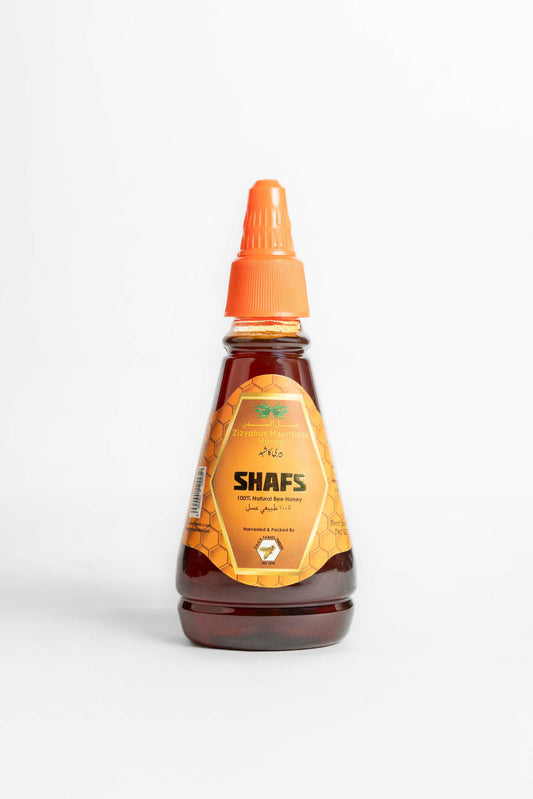
Our Bair (Sidr) Honey comes from our own hives placed in the beri flow - harvested, strained and packed at the farm by the same family that has kept bees since 1974. No blending, no colouring, no shortcuts.